Allergy Support for Food Businesses & Hospitality

Eating out with food allergies can be stressful. Many people living with food allergies worry about having an allergic reaction or anaphylaxis, and some fear being made to feel like a burden when dining away from home.

Clear communication between customers and catering staff is essential to help keep people with food allergies safe. It is equally important that food businesses are transparent about what they can and cannot safely provide. If an establishment is not confident that it can prepare food free from a particular allergen, including avoiding cross-contamination, it has the right to decline such a request.

By implementing measures to provide allergy-safe meals and minimise the risk of cross-contamination, food businesses can improve customer confidence, satisfaction and overall dining experience. These steps can also enhance the reputation of the establishment as a trusted venue where people with food allergies can dine safely and enjoy eating away from home.

Food Safety Laws

Learn how UK food safety and allergen laws help businesses keep customers safe by providing clear allergen information and reducing the risk of allergic reactions.

Find out more

Safe Serve Flags®

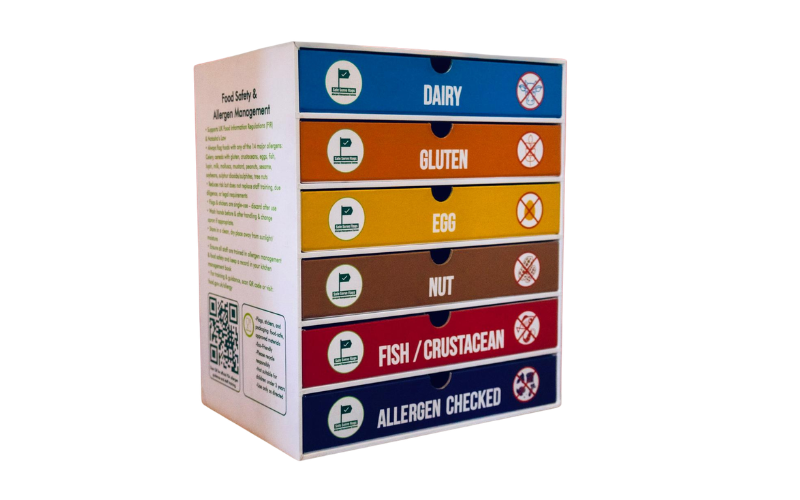
Safe Serve Flags® is a simple visual 6-stage allergy management system that keeps allergy information visible from the moment a customer declares an allergy until their meal is served. Using colour coded flags, matching stickers and visual checkpoints, it helps hospitality teams communicate clearly, reduce risk and build confidence throughout service.

Find out more

The stats:

Parents of children with a food allergy have told us that:

  • 97%

    worry about allergic reactions when not in control of food preparation.

    (Allergy UK, Living with a Food Allergy’ surveys)

  • 93%

    feel like they can never let their guard down.

    (Allergy UK, Living with a Food Allergy’ surveys)

  • 87%

    believe labelling needs to change because the current labelling practices are inadequate to meet their needs.

    (Allergy UK, Living with a Food Allergy’ surveys)

Allergen labelling for prepacked for direct sale (PPDS) food – Natasha’s Law

From October 1st 2021, changes to UK law came in force regarding allergen labelling for prepacked for direct sale (PPDS) food, also known as Natasha’s Law.

These new rules mean that any business that produces PPDS food is required to label it with the name of the food and a full ingredients list, with ingredients from the 14 regulated food allergens emphasised within the list.

View our food labelling resources here

What is PPDS food?

This relates to food that is packaged at the same location that it is offered or sold to consumers, and is in this packaging before it is ordered or selected.

It can include food that consumers select themselves (eg from a display unit), as well as products kept behind a counter and some food sold at mobile or temporary outlets.

For more information read the Food Standards Agency guidelines here.

Back to the top

Owen’s Law

Owen’s Law is a campaign led by the family of Owen Carey, who tragically lost his life aged just 18 due to an anaphylactic reaction whilst eating out with his family in 2017.

Owen’s family are calling for a ‘change in the law that compels restaurants to state the 14 regulated allergens prescribed by EU law in their dishes in writing at the point of ordering and without the customer having to ask’.

Read more about the campaign here.

Back to the top

Related resources

The 14 regulated food allergens

The 14 regulated food allergens

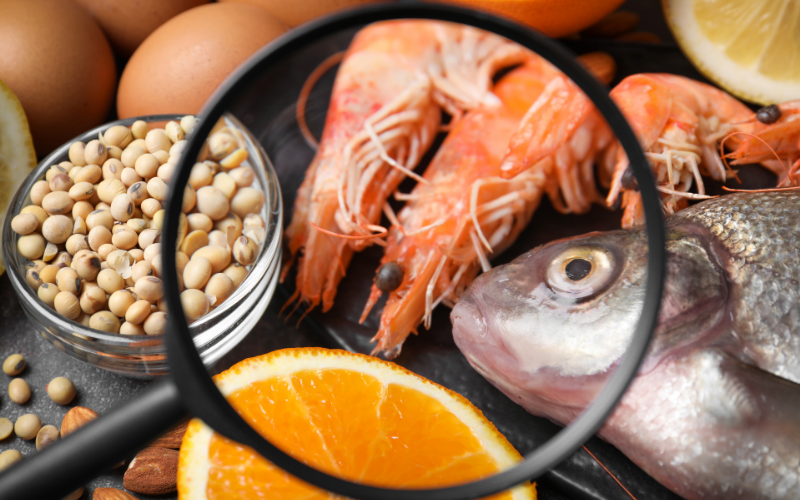
The 14 regulated allergens are celery, cereals containing gluten, crustaceans, eggs, fish, lupin, milk, molluscs, mustard, tree nuts, peanuts, sesame, soya and sulphur dioxide (sometimes known as sulphites).

Food allergy labelling

Food allergy labelling

Food allergen labeling is vital to safeguard the health and wellbeing of people living with food allergies, allowing them to make safe and informed choices.

Food allergy

Food allergy

Find out more about the symptoms, tests and treatments available for food allergy, alongside practical tips for living safely with this condition.

Tips for cafés, takeaways and restaurants

  • Know the food law: https://www.legislation.gov.uk/eur/2011/1169/contents.
  • You must provide information on the 14 regulated food allergens in writing if you sell or provide food to your customers directly.
  • Consider consumers may be allergic to an ingredient outside of the 14 regulated allergens, which are required to be declared as allergens by food law.
  • Maintain robust food allergy management procedures.
  • Make sure all staff are trained in understanding allergies and your allergy management procedures, with regular refreshes.
  • Keep staff kept up-to-date with menu and ingredient changes. Ideally brief staff at the beginning of each shift on menu changes.
  • Make sure that kitchen staff understand cross-contamination and are informed of the steps to take to reduce risk. For example, washing hands, maintaining an allergen-free food preparation area with separate cooking equipment and utensils, storing ingredients and prepared foods separately in sealed and labelled containers.
  • Remember, cross-contamination can also happen through using the same cooking oil.
  • Never second guess. If you are unsure if a dish has been cross-contaminated or accidently made with an allergen, do not serve it.
  • Don’t forget to include garnishes on ingredient lists.
  • Never just pick off an allergen from a food and then serve it back to someone with an allergy.

Back to the top

Tips for food manufacturers and supermarkets

  • Consistent and standardised allergen labelling across all products will allow the community to more easily identify potential risks.
  • When changing the recipe, this should be clearly marked. Whilst the food allergic community diligently read every label, often doing so multiple times, it’s essential to visibly notify changes to recipes and ingredients.
  • Prioritise readability of ingredients labels by using clear, legible fonts on products.
  • When dispatching food delivery orders, careful consideration should be given to substitutions or alternative options especially for those who have ordered products from free-from aisles.
  • Recognise that a food allergy is a long-term condition, unaffected by seasonal changes and doesn’t simply go away when the Christmas food hits the shelves. It’s important to ensure that free-from alternatives are still available, even during Christmas and Veganuary periods.
  • Exercise caution and transparency when including ‘may contain’ statements on product labels. Clearly communicate the level of risk to support individual living with food allergies in making safe and informed decisions.

Back to the top

and...

Adults with a food allergy have told us that:

  • 82%

    feel anxious or apprehensive about trying new foods.

    (Allergy UK, Living with a Food Allergy’ surveys)

  • 47%

    have actually had a reaction to food that has been incorrectly labelled.

    (Allergy UK, Living with a Food Allergy’ surveys)

  • 72%

    believe that “may contain” products are a hindrance to their shopping experience.

    (Allergy UK, Living with a Food Allergy’ surveys)

Racine’s story

Being a teenager and then an adult was socially challenging. I couldn’t just go anywhere with friends; everything had to be planned and I always had to ask what food would be available for me. I was hardly invited places and sometimes people would say, ‘I knew you couldn’t come anyway because of the food.’

Read more

The Allergy UK Patient Charter calls for  

  • The Right to clear and accurate information needed to make safe food choices to confidently eat in or out of the home without the fear of allergic reaction. 
  • The Right to live in a society that understands the lifelong impact of allergic disease. 
  • The Right to live in a society that takes allergy seriously.

Find out more about our Patient Charter here.

Sign Up For More Information

It is important to Allergy UK that we can engage with all people that are affected by allergic disease

Join our mailing list