The major 14 food allergens
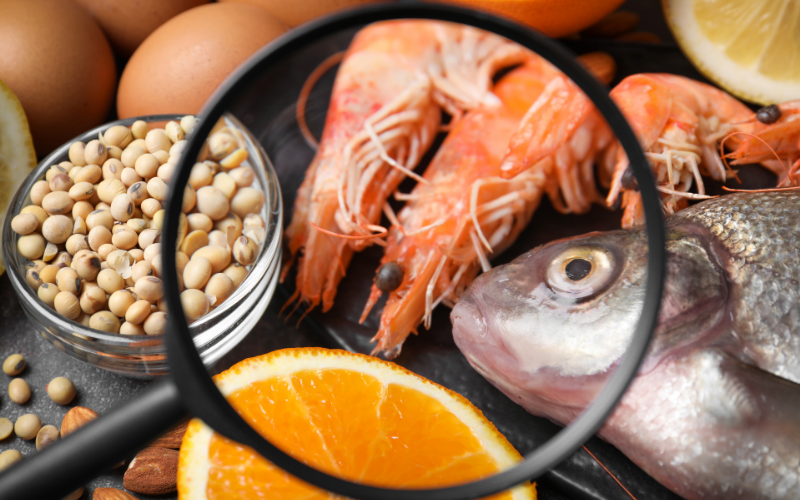
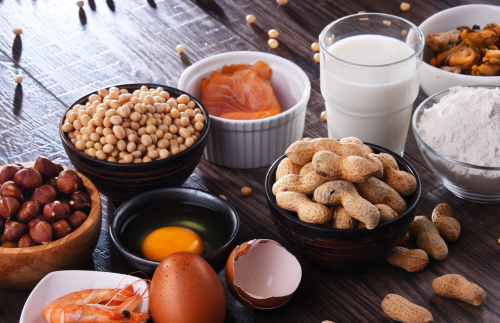
The ‘top 14’ allergens are celery, cereals containing gluten, crustaceans, eggs, fish, lupin, milk, molluscs, mustard, tree nuts, peanuts, sesame, soya and sulphur dioxide (sometimes known as sulphites).
 Allergy Support for Food Businesses | Allergy UK | National Charity
 Helpline01322 619898
It is vitally important that customers and caterers communicate well in order to serve a safe meal, transparency is essential. If an establishment is not confident that cross-contamination can be avoided in the kitchen, they do reserve the right to refuse to serve someone. But there are many ways this risk can be minimised and the food allergic customer can be kept safe and enjoy a meal away from home.
If you are a food business, you have a responsibility to keep people living with food allergy safe and comply with allergen information rules set out in food law.
Key rules come from:
This means you must:
Caterers must provide clear and accurate information about the ingredients in the dishes they serve to their customers. Staff must be ready to discuss allergens and food preparation with customers.
To ensure staff are well informed of allergen information and food preparation practices, all staff (front-of-house and kitchen) must have up-to-date training on:
Essential kitchen practices:
Parents of children with a food allergy have told us that:
(Allergy UK, Living with a Food Allergy’ surveys)
(Allergy UK, Living with a Food Allergy’ surveys)
(Allergy UK, Living with a Food Allergy’ surveys)
From October 1st 2021, changes to UK law came in force regarding allergen labelling for prepacked for direct sale (PPDS) food, also known as Natasha’s Law.
These new rules mean that any business that produces PPDS food is required to label it with the name of the food and a full ingredients list, with ingredients from the 14 major food allergens emphasised within the list.
View our food labelling resources here
What is PPDS food?
This relates to food that is packaged at the same location that it is offered or sold to consumers, and is in this packaging before it is ordered or selected.
It can include food that consumers select themselves (eg from a display unit), as well as products kept behind a counter and some food sold at mobile or temporary outlets.
For more information read the Food Standards Agency guidelines here.
Owen’s Law is a campaign led by the family of Owen Carey, who tragically lost his life aged just 18 due to an anaphylactic reaction whilst eating out with his family in 2017.
Owen’s family are calling for a ‘change in the law that compels restaurants to state the 14 major allergens prescribed by EU law in their dishes in writing at the point of ordering and without the customer having to ask’.

Adults with a food allergy have told us that:
(Allergy UK, Living with a Food Allergy’ surveys)
(Allergy UK, Living with a Food Allergy’ surveys)
(Allergy UK, Living with a Food Allergy’ surveys)
Being a teenager and then an adult was socially challenging. I couldn’t just go anywhere with friends; everything had to be planned and I always had to ask what food would be available for me. I was hardly invited places and sometimes people would say, ‘I knew you couldn’t come anyway because of the food.’
It is important to Allergy UK that we can engage with all people that are affected by allergic disease
Join our mailing list