

What is a food allergy?

A food allergy is when the body’s immune system reacts unusually to specific foods. Although allergic reactions are often mild, they can be very serious. In the most serious cases, a person has a severe allergic reaction (anaphylaxis), which can be life-threatening. If you think someone has symptoms of anaphylaxis, call 999 immediately, ask for an ambulance, and tell the operator they are experiencing anaphylaxis.

Jump to…

Types of food allergies

Food allergy can be caused by a surprisingly wide range of foods. While some allergens are much more common than others, any food has the potential to cause an allergic reaction.

In the UK and EU, food law identifies 14 regulated food allergens that are some of the more common foods linked to serious allergic reactions. By law, information about these 14 allergens must be available for all food sold, including pre‑packed and loose foods. However, allergy can occur to any food, and all food allergies must be taken seriously.

Explore our food allergy information to learn more about individual allergens, symptoms, diagnosis and managing food allergy safely.

Types of food allergies

The top 14 regulated food allergens

In the UK, there are 14 regulated food allergens that are recognised as some of the most common foods linked to allergic reactions. These include celery, cereals containing gluten, crustaceans, eggs, fish, lupin, milk, molluscs, mustard, peanuts, sesame, soya, sulphur dioxide and sulphites, and tree nuts. By law, these allergens must be clearly declared on food labels and for food sold loose or without packaging, helping people with food allergies identify foods they need to avoid.

However, it is important to remember that any food can cause an allergic reaction, not just one of the 14 regulated allergens. If you have a food allergy, understanding food labels and knowing how to identify your allergen can help you make safer choices when shopping, eating out or preparing food. If you are unsure about a suspected food allergy or how to manage your diet, speak to a healthcare professional for advice.

Find out more about the top 14 allergens

Back to top menu

Symptoms of a food allergy

Food allergy symptoms can vary widely from person to person and can range from mild to severe. They typically occur shortly after consuming or coming into contact with the allergen and can affect different parts of the body. Common symptoms of a food allergy include:

  • Digestive problems: Nausea, vomiting, diarrhoea, abdominal pain, cramps.
  • Skin reactions: Itching, hives (red, raised welts on the skin), eczema (itchy, inflamed skin), redness, swelling.
  • Respiratory issues: Sneezing, runny or stuffy nose, coughing, wheezing, shortness of breath, difficulty breathing, chest tightness.
  • Swelling: Swelling of the lips, tongue, throat, face, or other parts of the body.
  • Cardiovascular symptoms: Rapid or weak pulse, light-headedness, dizziness, fainting.
  • Anaphylaxis: A severe, potentially life-threatening reaction involving multiple systems of the body, characterised by a drop in blood pressure, loss of consciousness, and difficulty breathing. Anaphylaxis requires immediate medical attention.

Symptoms of a food allergy can occur within minutes to a couple of hours after consuming the allergen. In severe cases, anaphylaxis can happen rapidly, within minutes, and requires immediate treatment with adrenaline and emergency medical care.

It’s important to note that the severity and type of symptoms can differ among individuals, and some may experience only mild symptoms while others might have more severe reactions. If someone suspects they have a food allergy based on their symptoms, it’s crucial to speak to a healthcare professional for accurate diagnosis, testing, and guidance on managing food allergies.

Back to top menu

IgE vs Non-IgE mediated food allergy

Food allergies are divided into 3 types, depending on symptoms and when they occur:

IgE-mediated food allergy is the most common type, triggered by the immune system producing an antibody called immunoglobulin E (IgE). Upon subsequent exposure to the same food allergen, the allergen binds to the IgE antibodies on the mast cells, triggering these cells to release various chemical substances, including histamine and other inflammatory mediators. This release of chemicals leads to the symptoms associated with an allergic reaction.

Symptoms of an IgE-mediated food allergy occur a few seconds or minutes after eating. Symptoms can range from mild to severe and may include skin reactions (such as itching, hives, or eczema), digestive issues (like vomiting, diarrhoea, or abdominal pain), respiratory symptoms (such as coughing, wheezing, or difficulty breathing), swelling of the lips, tongue, throat, or face, and in severe cases, anaphylaxis, a potentially life-threatening reaction affecting multiple systems of the body.

Non-IgE-mediated food allergies refer to allergic reactions that occur without involving Immunoglobulin E (IgE) antibodies. Unlike IgE-mediated allergies, these reactions involve different components of the immune system and have a delayed onset.

Mixed IgE and non-IgE-mediated food allergies: Some individuals may experience a combination of both IgE-mediated and non-IgE-mediated responses to certain foods. This type of allergy can present with both immediate (IgE-mediated) symptoms, such as hives or swelling, as well as delayed (non-IgE-mediated) symptoms, such as gastrointestinal disturbances or skin issues.

Back to top menu

Testing and diagnosis

It’s essential for individuals with food allergies to be aware of their specific allergens, read food labels carefully, avoid cross-contamination, and have an emergency action plan in case of accidental exposure. Consulting with a healthcare professional and undergoing allergy testing can help determine specific food allergies and appropriate management strategies.

Diagnosing a food allergy is essential for preventing reactions, managing symptoms, improving quality of life, avoiding unnecessary dietary restrictions, and ensuring proper support and guidance for individuals living with food allergies.

Diagnosing a food allergy is crucial for several reasons:

  • Accurate identification of triggers
  • Prevention of severe reactions
  • Avoidance of unnecessary dietary restrictions
  • Finding the right support and guidance.

If you are looking for help and advice or information, you can call Allergy UK’s Helpline on 01322 619898, they can support you through your food allergy journey and advise on your nearest NHS allergy clinic or consultant.
Factsheet: Testing and Diagnosing Food Allergies

Keeping a food and symptoms diary

A food symptoms diary is a record-keeping tool used to track an individual’s dietary intake and any associated symptoms or reactions that may occur afterward. It is particularly useful in cases where there’s a suspicion of food allergies or intolerances.

Factsheet: Food and Symptoms Diary

Back to top menu

Treating a food allergy

The best way to prevent an allergic reaction is to identify the food that causes the allergic reaction and avoid it.

  • Avoid making any radical changes, such as cutting out dairy products, to your or your child’s diet without first talking to your GP. For some foods, such as milk, you may need to speak to a dietitian before making any changes.
  • Antihistamines can help relieve the symptoms of a mild or moderate allergic reaction. A higher dose of antihistamine is often needed to control acute allergic symptoms.
  • Adrenaline is an effective treatment for more severe allergic symptoms, such as anaphylaxis.

People with a food allergy are often prescribed adrenaline auto-injectors, which contain doses of adrenaline that can be used as an effective treatment in an anaphylaxis emergency.

Managing a food allergy

Managing a food allergy requires vigilance, awareness, and proactive measures to avoid allergens and manage potential allergic reactions. Here are some essential tips for managing life with a food allergy:

  • Know your allergens: Identify the specific foods that trigger your allergic reactions. This might involve allergy testing conducted by a healthcare professional.
  • Carry medication: Always carry your emergency medication, such as two adrenaline auto-injectors, with you at all times. Ensure that family members, friends, or colleagues also know how to use it.
  • Always read ingredient labels carefully. All pre-packaged food must show a list of ingredients which clearly identifies all the ingredients. There are different regulations for foods that are not pre-packaged and which are prepared on-site in smaller food businesses eg a café/sandwich shop/deli. There is still a requirement to provide information on the ingredients and allergen content, but how this information is shared is up to the individual business. They may choose to provide this information in a written form, for example, on a chalkboard, or they may communicate the information verbally.
  • Inform others: Educate family members, friends, caregivers, teachers, and colleagues about your or your child’s food allergy. Explain the severity of the allergy, how to recognise symptoms, and what to do in case of a reaction.
  • Plan ahead: When travelling or attending events, take safe snacks or meals where possible to ensure you have options available. Research restaurants or food options beforehand to find allergy-friendly choices.
  • Be cautious with cross-contamination: Avoid sharing utensils, plates, or cooking surfaces with allergenic foods. Ensure proper cleaning of surfaces to prevent cross-contact.

Back to top menu

Food allergy vs intolerance

A food intolerance does not involve the immune system and is not the same as an allergy. It can happen when the body has difficulty digesting or processing a particular food or a substance within it, such as lactose in lactose intolerance. Symptoms can include bloating, abdominal pain, diarrhoea and other digestive problems. Unlike a food allergy, a food intolerance does not cause anaphylaxis, and some people may be able to tolerate a small amount of the food without experiencing symptoms. If you think you or your child may have a food allergy or intolerance, speak to a healthcare professional for advice.

Factsheet: Food Intolerances
Factsheet: Food and Symptoms Diary

Back to top menu

Translation Cards

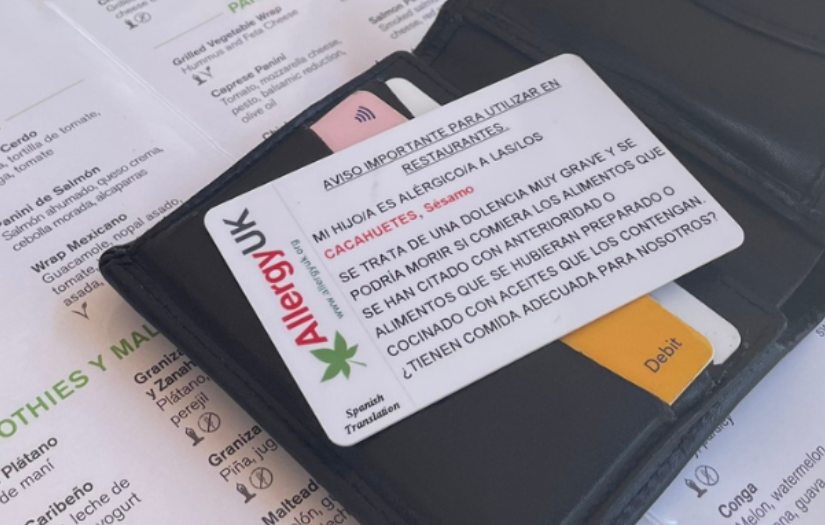
Translation cards are available from Allergy UK and will ensure others are made aware of your allergy despite any language barriers. The cards feature an allergy alert message, an emergency message and a message for use in restaurants to ensure that your food order is free from the particular allergen that causes your reaction.

Find out more

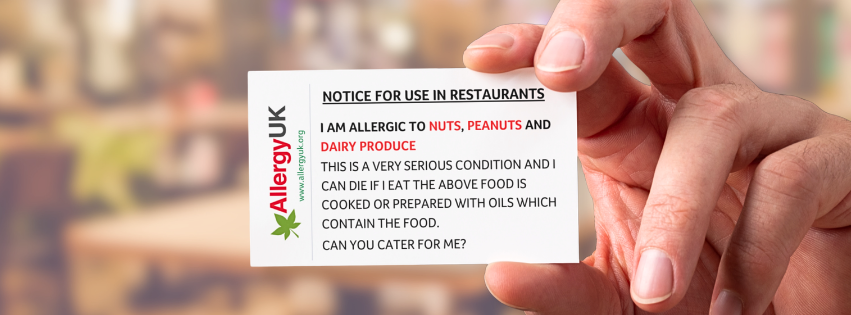
Allergy Restautant Cards

Whether you’re dining in a restaurant, grabbing street food, or ordering in busy or loud environments like bars, clubs, or festivals, communicating food allergies clearly can be challenging. We believe this card is a vital addition to your allergy toolkit, helping you feel more confident and supported.

Find out more

Travelling with a food allergy

On this page you will find information about travelling abroad with a food allergy, airline polices for customers with allergies and top tips for holidays, from booking and packing to eating out while you’re there. We have a range of factsheets available on different topics related to travelling with an allergy.

Find out more

Food allergen labeling

Food allergen labeling

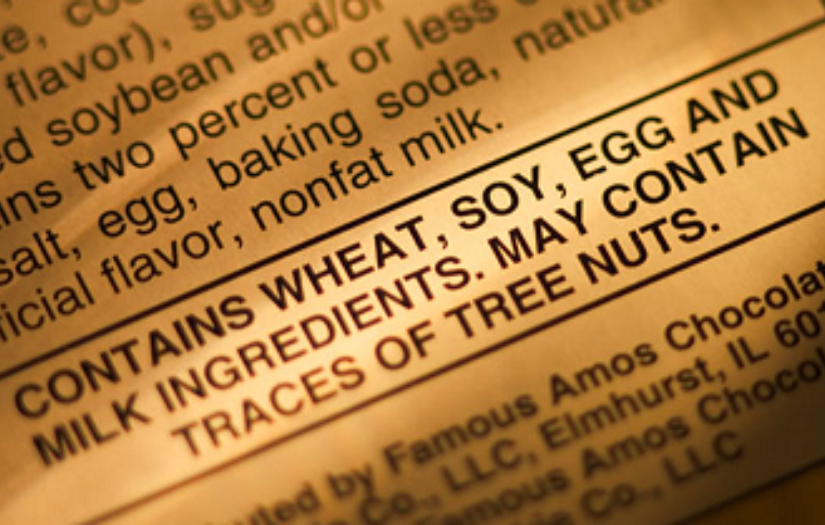
Food allergen labeling is not only a matter of convenience but a critical element in safeguarding the health and well-being of individuals with food allergies, ensuring they can make safe and informed choices about the foods they consume.


Shopping and Cooking for a Restricted Diet

Shopping and Cooking for a Restricted Diet

Shopping for yourself or others on a restricted diet can be daunting and time consuming if you are not used to it. The following is a guide to help you shop successfully whilst saving time and ensures you no longer feel left out when it comes to eating your favourite foods.

Decoding food allergy labelling

Decoding food allergy labelling

Food labelling can be complex and confusing, leaving many individuals uncertain about the safety of the products they consume. Our new leaflet serves as a practical guide to navigating food labels, providing clarity on allergen information and empowering consumers to make informed choices confidently.

Sign Up For More Information

It is important to Allergy UK that we can engage with all people that are affected by allergic disease

Join our mailing list