
 Helpline

How does the Allergy UK Helpline work?
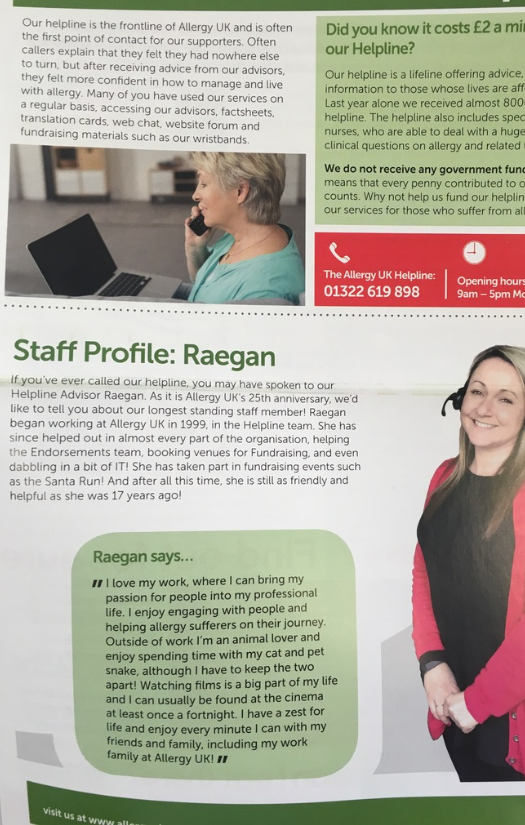
I might be biased but to me, the Helpline is really at the heart of what we do at Allergy UK. It’s a confidential support service where anyone affected by allergy, someone living with it, a parent, carer, or even a healthcare professional, can get in touch with us for trusted information and practical advice.
People reach out by phone, email, webchat or via our website, usually when they’re worried or unsure what to do next.
After 26 years at Allergy UK, I’ve found that what’s really stayed the same is how much people want to talk to someone who just ‘gets it’. Sometimes it’s about information, but often it’s also reassurance, helping people feel heard, supported and generally less alone in managing their allergy.
What happens when someone first gets in touch with you?
We start by listening. Most people are worried or unsure, so we take time to understand what’s going on for them.
We’ll ask a few simple questions to get a better picture, then offer advice and practical guidance based on their situation. If needed, we’ll also signpost them to GPs, allergy clinics or other trusted support.
Everything is confidential and individual, and we aim to leave people feeling clearer and more reassured. We have a lot of regular callers, so building an ongoing relationship is really important.
What kinds of issues or concerns do callers most often raise?
We cover a wide range, but there are a few key areas. Many people contact us at the start of their journey or while waiting for a diagnosis and they are trying to work out if symptoms could be allergy related.
Food allergy is a big one, things like diet, food labelling, cross-contamination and eating out safely. Parents often need reassurance around managing allergies in children day to day.
We also support eczema, asthma, drug allergy, allergies in the home, plus challenges around school, work and travel. And, when hay fever season hits, we definitely hear about it!
Mostly people just want clarity, reassurance and practical next steps.
Tell us a little bit about yourself and your career at Allergy UK and What motivated you to join the charity.
I’ve been at Allergy UK for 26 years, though not always on the Helpline. I’ve seen both the charity and allergy care change a huge amount in that time.
I was motivated by wanting to help people get clear, reliable information at a time when allergy wasn’t as well understood as it is now.
Working directly with individuals and families is what’s kept me here. It’s rewarding knowing a conversation can genuinely help someone feel more confident and less overwhelmed.
What has changed in the time you have been at Allergy UK in terms of callers or allergy services?
The biggest change is awareness and complexity. People are more informed now, but often dealing with more complex conditions, so the conversations are more detailed.
The way people contact us has also changed massively. It used to be mainly phone calls, but now we support people via email, webchat and online forms too.
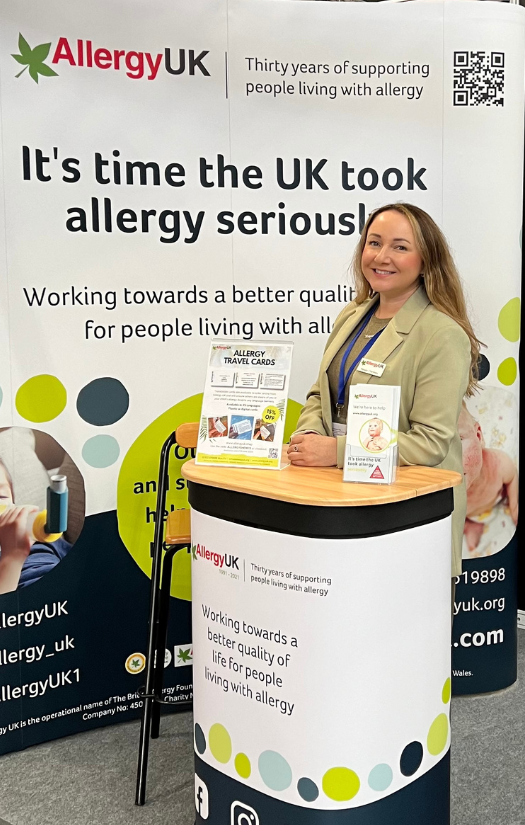
Our digital work has grown a lot as well, with regular website updates to keep information current and accessible. We’ve also moved our Translation Card service into an online shop, which has made it much easier for people to access.
The core hasn’t changed, it’s still about support, but the way we deliver it has evolved a lot to keep up with the ever-changing world.
Can you share a typical call or interaction that shows the impact of the service?
There isn’t really a “typical” call, but many are similar in how they start, someone newly diagnosed or worried after a reaction, often feeling overwhelmed.
For example, a parent might suddenly be trying to understand food labels, school safety and what their child can safely eat.
We go through things like this step by step, giving clear information and practical advice, along with reassurance. Often, it’s that reassurance that makes the biggest difference.
We don’t always hear the outcome, but we’re told a lot that those conversations help people feel calmer and more in control.
How do you support callers who may be in crisis or urgent need of help?
We stay calm, listen carefully and try to understand what’s happening as quickly as possible.
We give clear, safety-first advice based on trusted information provided by our amazing clinical team, including how to recognise symptoms and what immediate action to take. If it sounds like an emergency, we always advise seeking urgent medical help straight away or using prescribed medication such as an auto-injector.
We also focus on reassurance, so people feel supported rather than panicked, and then help them think about next steps once the immediate situation is addressed.
What advice would you give to someone who DOESN’T have an allergy about supporting someone who does?
Take it seriously, even if you don’t live with it yourself. Allergy isn’t a preference; it can be life-threatening.
Listen to the person and respect their needs without questioning them. Small things like checking ingredients, avoiding cross-contamination, or adjusting plans can make a big difference.
It also helps to understand the basics, like how to spot a reaction and what to do in an emergency. Most of all, it’s about being thoughtful and supportive so people feel safe and included.
What would you say to someone who is unsure about reaching out to your team for help?
I’d really encourage them to get in touch. You don’t need to be in crisis or have all the answers to contact us. People can come to the Helpline at any stage, whether they’re newly diagnosed, waiting for answers, or just feeling unsure about something.
A lot of people hesitate because they think their question might be too small or that they should already know the information, but that’s absolutely not the case. We speak to people every day who just need clarity or reassurance, and no question is ever a wasted one.
So, if you’re unsure, worried, or just need guidance, you’re very welcome to reach out. That’s exactly what we’re here for.
And finally, how do you relax and switch off?
After many years in a role that involves supporting people through quite serious and sometimes stressful situations, I’ve learned the importance of switching off properly when the day ends.
For me, it’s about simple things, spending time with family and friends and doing things that don’t involve screens or information overload, although I am a bit of a movie buff, so I am often at the cinema, but that’s a different type of screen. This helps me reset and step away from the intensity of the working day.
How you can reach out and get support from Allergy UK?
If you need support, advice or simply someone to talk to about living with allergy, our Helpline is here for you. You can speak directly to one of our trained advisors by calling 01322 619898, email us at [email protected], or use our webchat to connect online via our website.