
 Helpline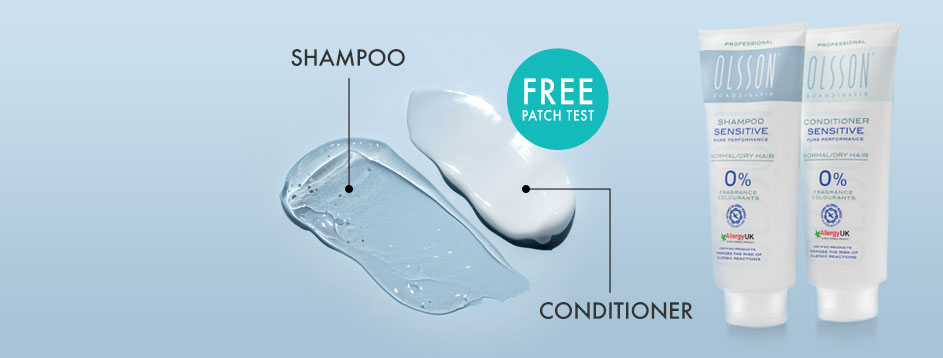
Olsson Scandinavia Haircare
Some brands and products recognise this risk for their customers and have introduced steps to address this. One such brand is Olsson Haircare who offer those who live with allergies and sensitivities like eczema, the opportunity to Patch Test. This involves placing a small amount of product behind the ear and then monitoring the skin and scalp for reactions or irritation. This allows those with eczema-prone skin to gauge the compatibility of the products before investing in the full-size products. Olsson has designed their shampoo and conditioner with sensitive types in mind by creating a no-compromise salon performance haircare range. They have held our Allergy UK Friendly Product Award for many years, meaning it’s a potential benefit to the allergic community and is unlikely to cause a reaction.
The benefits of this patch testing method:
Less wasted spend on haircare products:
Eczema can be a costly skin condition to manage. Medical treatments, prescription creams, and specialised skincare products can quickly add up, so when it comes to haircare, the cost of trial and error can also be significant.
It’s expensive finding the right products that work well for you. I can spend £10-15 pounds on a product for it to cause stinging and burning. It’s frustrating that you can’t return it and are stuck with a product that doesn’t work. It’s a costly condition to live with.
By having the opportunity to patch-test a product before purchasing a full-sized bottle, individuals avoid wasting money on products that can lead to adverse reactions. This approach allows for informed decision-making and reduces the risk of triggering uncomfortable and distressing eczema flare-ups.
Understanding a product’s suitability:
Each person’s skin is unique, and what works for one person’s eczema-prone skin may not work for another. Patch testing enables you to find products in your haircare routine that is personalised to you. Just as with skincare, a personalised approach to haircare is essential for individuals with eczema-prone skin. Everyone’s scalp and skin react differently to various ingredients and fragrances – knowing which formulations work for your skin whilst helping to meet your haircare goals is vital in building your personal haircare routine.
Reduced risk of skin irritation and flare-ups:
Eczema can affect various parts of the body, from head to toe. Patch-testing your haircare products approximately 48 hours before using them on your intended hair wash day not only allows you to identify if your scalp becomes irritated but your whole body. When washing your hair, it’s not uncommon for a product to come into contact with other parts of your body from your hair, and if you wash your hair in the shower, then you’ll know this isn’t just the hands that can be affected. Patch-testing allows you to ensure the shampoo and conditioner are gentle and suitable for your sensitive skin, minimising the risk of skin irritation and flare-ups.
Visit the link below to find out if Olsson Haircare is right for you by requesting a free patch test. Postage not included.
Get your free patch test today
This article is sponsored by Olsson Haircare.